I Built an AI CGO (Chief Growth Officer) in Cursor. Here's Why.
I initially built this system to support Principal Growth work in an IC role.
For a decade, I led big, cross-functional Growth teams— product, marketing, partnerships, and operations. The work was strategic and important, and I was good at it. But somewhere along the way, I realized I missed something fundamental: I missed executing my own work.
That’s a strange thing to admit when you’re senior. The whole point of climbing the ladder is supposed to be getting further from the details, building leverage through people, spending your time on “higher-order” problems. But, the further I got from the actual work, the less satisfied I felt. Managing the machine was interesting. But I wanted to build things again.
So I made a change. I left the big team, the big title, and went into consulting. I started advising PE firms and VCs on how to grow their portfolio companies, running fractional Head of Growth engagements, bringing PLG playbooks to businesses that had never thought that way before. It was exactly what I wanted. Strategic, yes. But also hands-on. I was back in the work.
There was just one problem: I never had enough help.
When you’ve spent a decade with a team of specialists at your disposal, going solo is humbling. The competitive analysis that used to take a team two weeks? That’s on you now. The ICP research, the positioning work, the channel strategy, the campaign briefs, the reporting, the measurement frameworks? All you. I found myself constantly choosing between doing things well and doing them at all. The bottleneck wasn’t strategy. It was execution capacity.
And here’s the part that surprised me most: I loved the IC work. The actual doing. Writing the positioning doc myself instead of editing someone else’s draft. Building the growth model instead of reviewing it. Mapping the customer journey instead of approving it. Somewhere in my years of managing, I’d forgotten how much I enjoyed this.
But enjoyment doesn’t solve the capacity problem. There are only so many hours in a day, and fractional work means multiple clients, each with real needs, each deserving more than I could give as one person.
Then I started using LLMs.
It started small, in 2024 with projects and GPTs in ChatGPT. I’d prompt my way through competitive research, use Claude to draft positioning options, have the AI help me structure a go-to-market plan— constantly optimizing my prompts and project instructions to improve the outputs. It was clunky at first. The outputs needed heavy editing, but the potential was obvious. For the first time in my solo consulting journey, I felt like I had a junior team member again. One that was available 24/7, was exceptionally pleasant to work with, and got faster the better I learned to direct it.
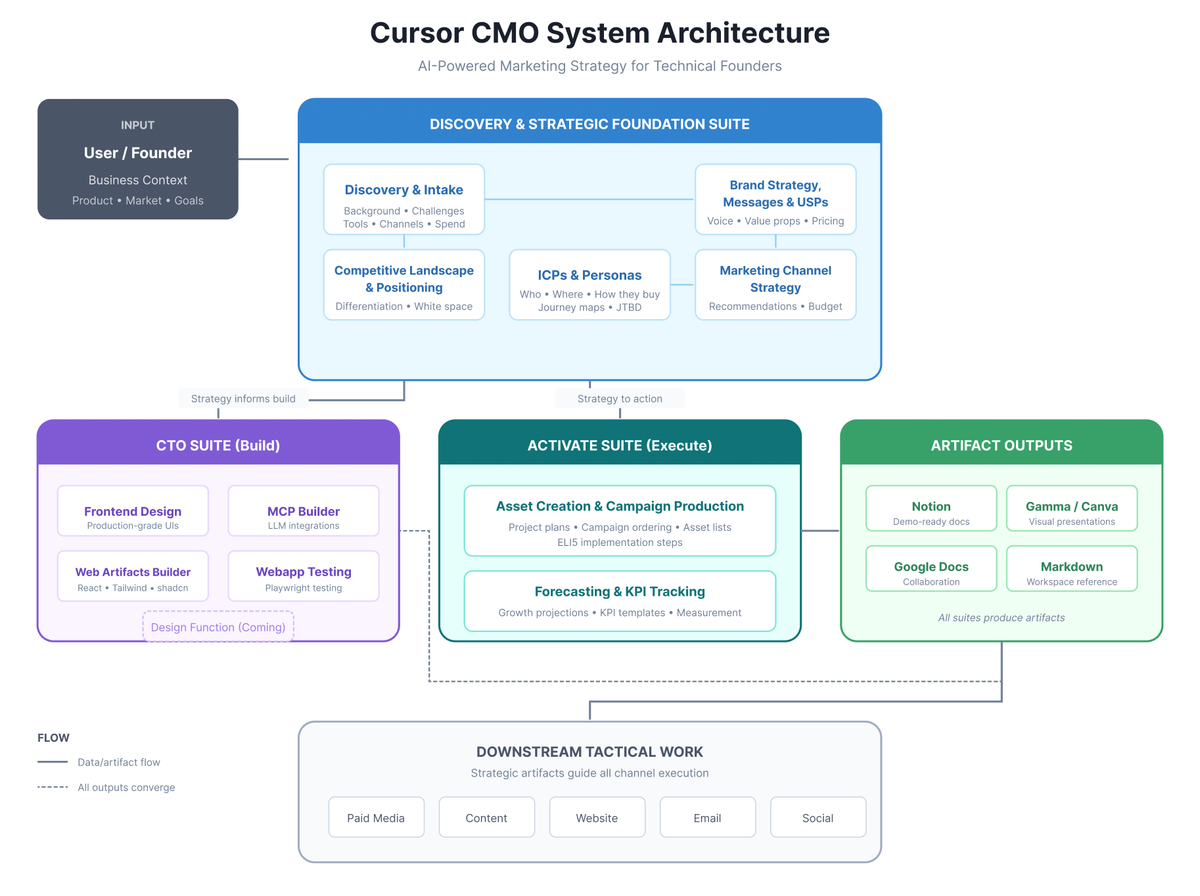
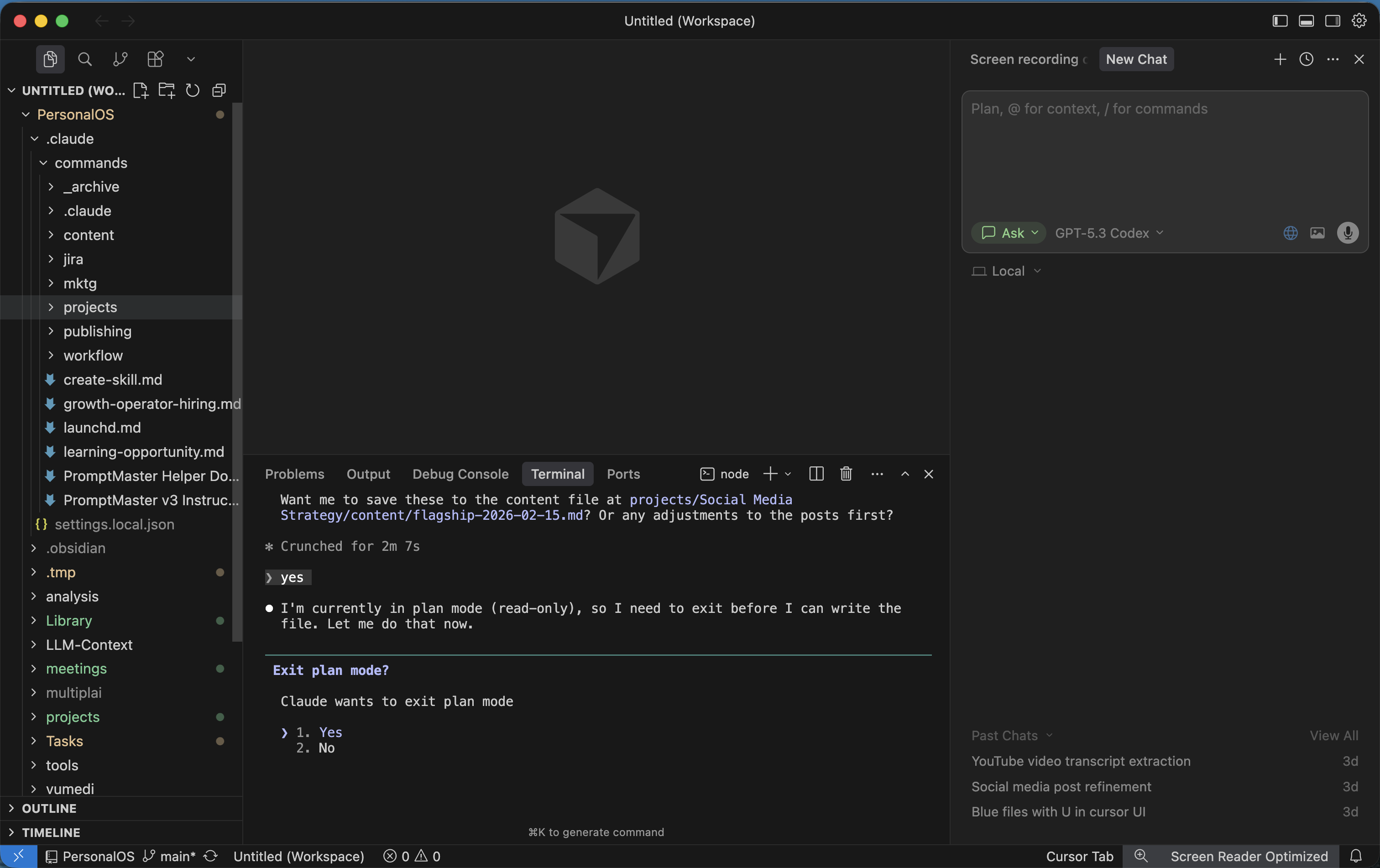
Fast forward to today. That experiment has become something much bigger. I’ve built what I can only describe as a full Growth org operating inside Cursor. Twenty-seven commands that execute the workflows I used to need a team for. Not a chatbot that answers questions, but a system that actually does the work.
The system runs three interconnected skill suites:
- The first handles Discovery and Strategic Foundation: competitive landscape, positioning, ICPs, personas, brand strategy, channel recommendations. Everything a senior growth leader would produce in the first 90 days with a new company, automated into a workflow that takes hours instead of weeks.
- The second suite handles building: frontend design, web applications, internal tools. The CTO side of the house for when strategy needs to become product— this part is inspired by a podcast I mentioned in my last post.
- The third translates strategy into action: campaign production ordering, asset lists, forecasting, KPI tracking. The bridge between “here’s the plan” and “here’s what to do Monday morning.”
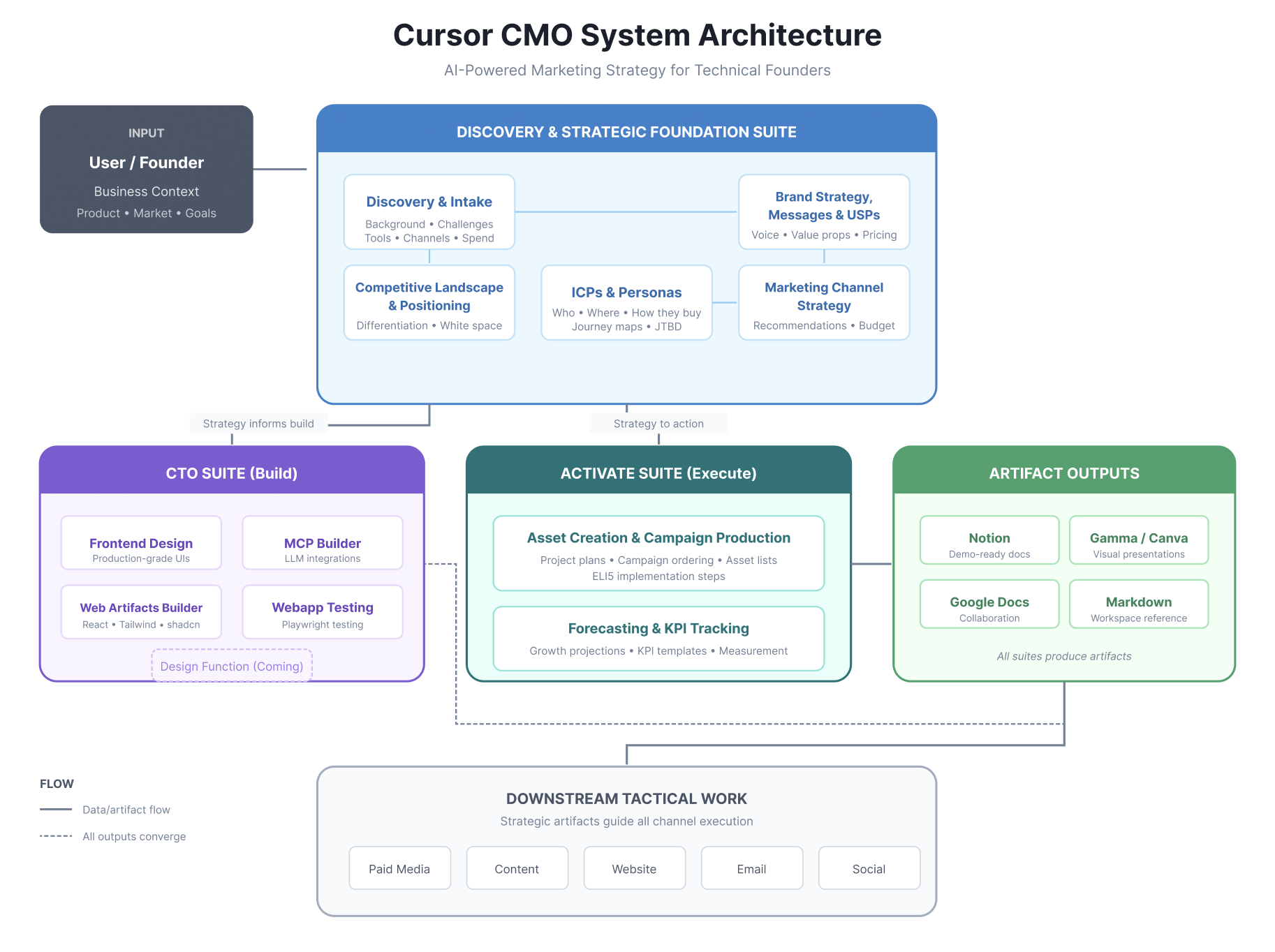
Every command produces real artifacts— not chat responses, but actual deliverables. Notion pages ready to share with a client. Gamma presentations polished enough for a board meeting. Markdown files that become the source of truth for all downstream work. Google Docs for collaboration. The outputs look like they came from a well-resourced marketing team because, in a sense, they did.
I’ve been using this system for my own clients for months now. What used to take me a full week of discovery, research, and synthesis now happens in a day. The positioning work that I’d block out entire weekends for? A focused afternoon. And the quality isn’t compromised. If anything, it’s more consistent, because the system embeds the frameworks and questions I’ve developed over fifteen years. My expertise is encoded in the workflows.
I realized along the way that other functional experts would find the AI CGO system equally— if not more— useful than I do.
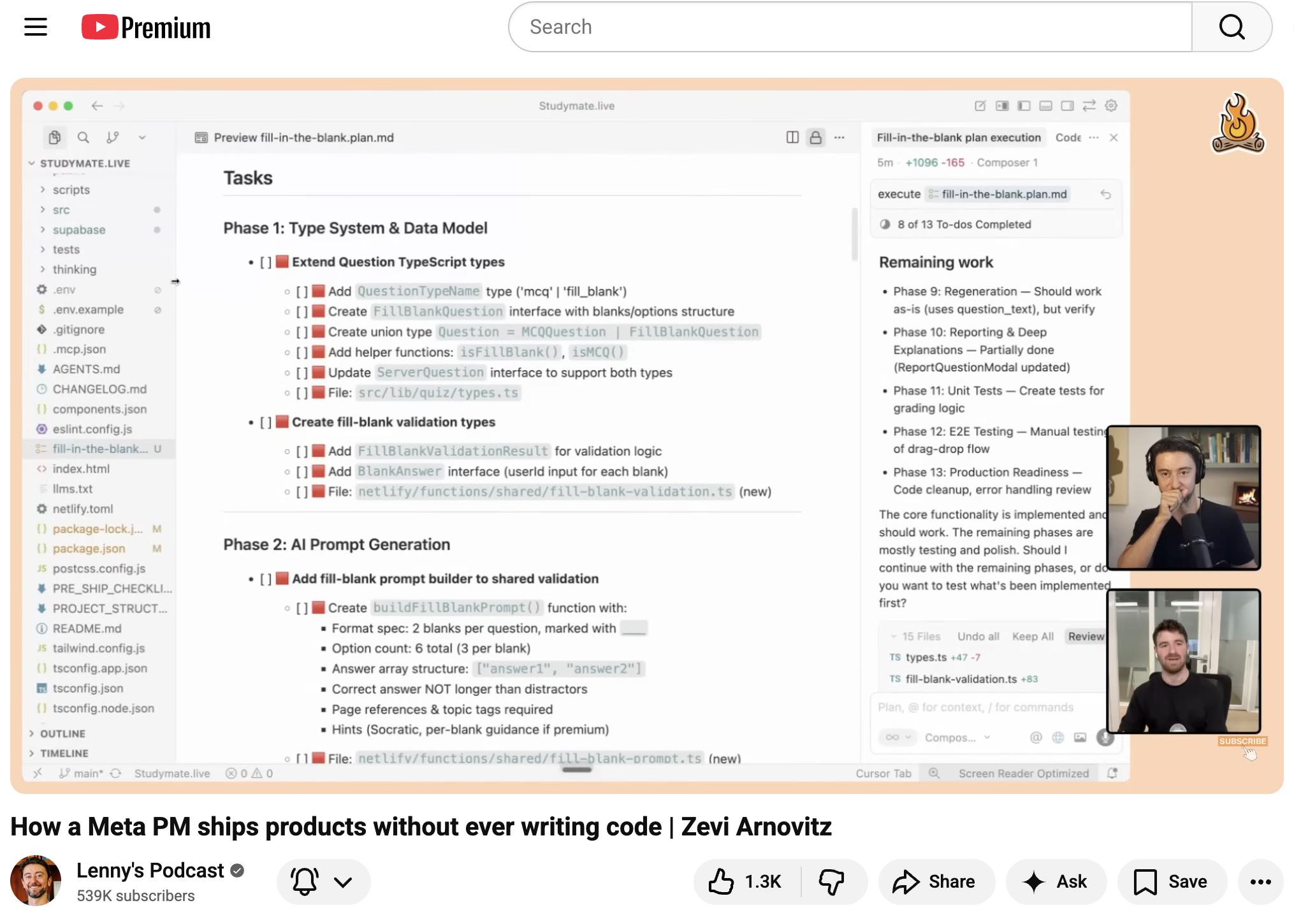
What made me decide to share this publicly was watching Zevi and Lenny demonstrate their “AI CTO” system. They showed how a technical founder could run engineering workflows through Cursor, essentially building a one-person dev shop with AI handling the execution. It clicked for me: I’d built the marketing equivalent. An AI CGO.
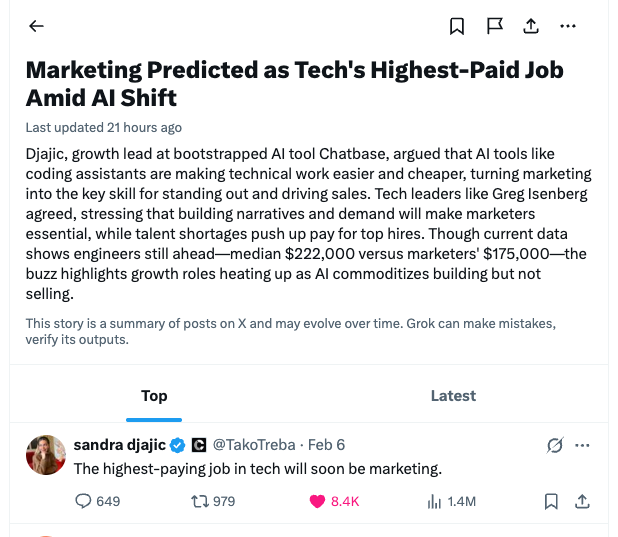
This made me realize something about where we are in this moment: the tools have gotten good enough that the bottleneck has shifted. Building software is no longer the hard part. A PM, designer, or technical founder can ship a working product with AI assistance. The hard part now is distribution. Getting people to notice. Getting them to care. Getting them to buy.
This is the gap my system addresses. Not the tactical execution (there are plenty of AI tools that write copy or generate ads) but the strategic layer that makes tactics work. The positioning that ensures your ads resonate. The ICP work that ensures you’re targeting the right people. The channel strategy that ensures you’re not wasting budget on platforms where your customers don’t live. The connective tissue between “we built something” and “people are buying it.”
Although I built this system to help me do great work for multiple clients without any direct reports, I now realize that this system may be even more useful to people without marketing expertise:
Founders that have built something awesome, want to make money with it, but are avoiding the distribution conversation. They can use a system like this to manage all of their marketing… without spending $400K/year on a seasoned CMO or full-service agency.
Agencies and Private Equity firms that want to implement AI-centric Growth systems in their teams and portcos, but need someone to help them do it that has has put in the early “head bumps” to help them avoid some common pitfalls.
Marketers that want to dive into post-AI growth playbooks and AI-operating principles but don’t know where to start and don’t see solutions on X or YouTube yet from people who are facing the same opportunities and challenges as they are in their role.
And fellow fractional CMOs and Heads of Growth that love the work, but can never find help and can’t do it alone.
I’m lowering the technical skill barrier to using my AI CGO system and sharing it publicly within the month.
I’m making the codebase more usable over the next few weeks, cleaning up the rough edges, writing documentation that doesn’t assume you’ve lived in my head for a year. I’m also adding a basic front-end to make the system more accessible to non-technical users that aren’t comfortable installing commands from GitHub and building in Cursor (yet!). I plan to release it publicly on GitHub later this month. Open source, free to use, free to modify.
Until then, if you’re curious about what this looks like in practice, want to see a demo of the commands in action, or are curious to try some of the workflows on your own business, reach out! I’d love to walk you through the setup and get your feedback before the public release.
Because here’s what I’ve learned building this: the best systems aren’t built in isolation. They’re built through iteration, through real usage, through feedback from people who see things you missed. This is another reason why I feel compelled to share this system— most of the YouTube and X guidance on this topic today is coming from solo-operators and consultants who aren’t using these systems in teams or for “real” work production. When you go to implement their tips and systems, you hit a brick wall. I spent fifteen years learning that lesson with human teams. Turns out it applies to AI systems too.
The work I missed? I found it again. Just not in the way I expected.